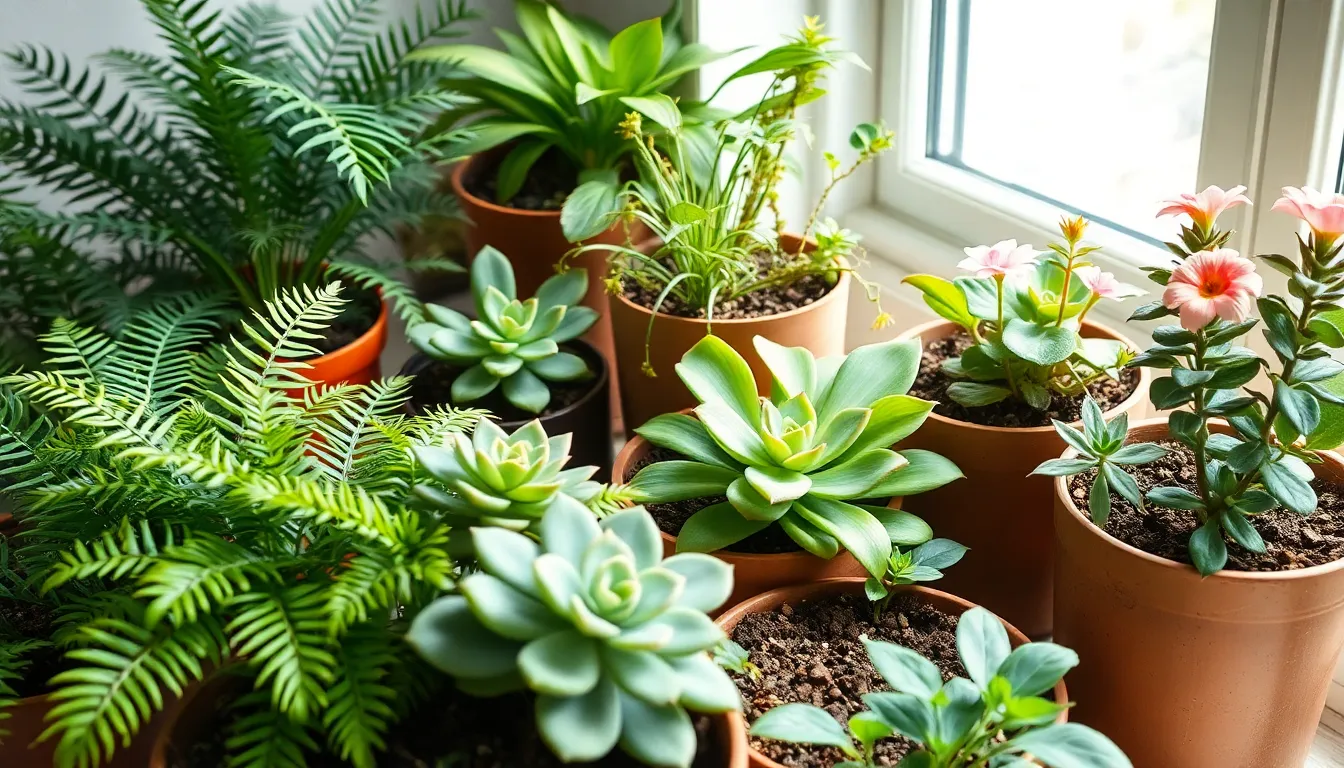

Indoor plants are like the extroverts of the plant world—they thrive on attention and a little TLC. But before they can charm their way into your heart, they need the right potting mix to set the stage for their leafy performances. Choosing the best potting mix isn’t just about filling a pot; it’s about giving your green friends the luxurious spa treatment they deserve.
Best Potting Mix for Indoor Plants
Selecting the right potting mix creates a supportive environment for indoor plants. It is crucial to understand what constitutes a quality potting mix.
What Is Potting Mix?
Potting mix is a blend of organic and inorganic materials designed specifically for container gardening. Common ingredients include peat moss, vermiculite, perlite, and compost. Each component serves a purpose, such as moisture retention or aeration. Quality potting mixes avoid garden soil, which can contain pests or diseases.
Importance of Quality Potting Mix
Investing in quality potting mix significantly impacts plant health. High-quality mixes promote drainage while retaining moisture, preventing root rot. Additionally, these mixes contain nutrients that support growth, enhancing overall vitality. Using inferior mixes can lead to compacted soil and poor airflow, hindering root development. Successful indoor gardening relies on providing the right conditions, and selecting the right potting mix establishes that foundation.
Types of Potting Mix
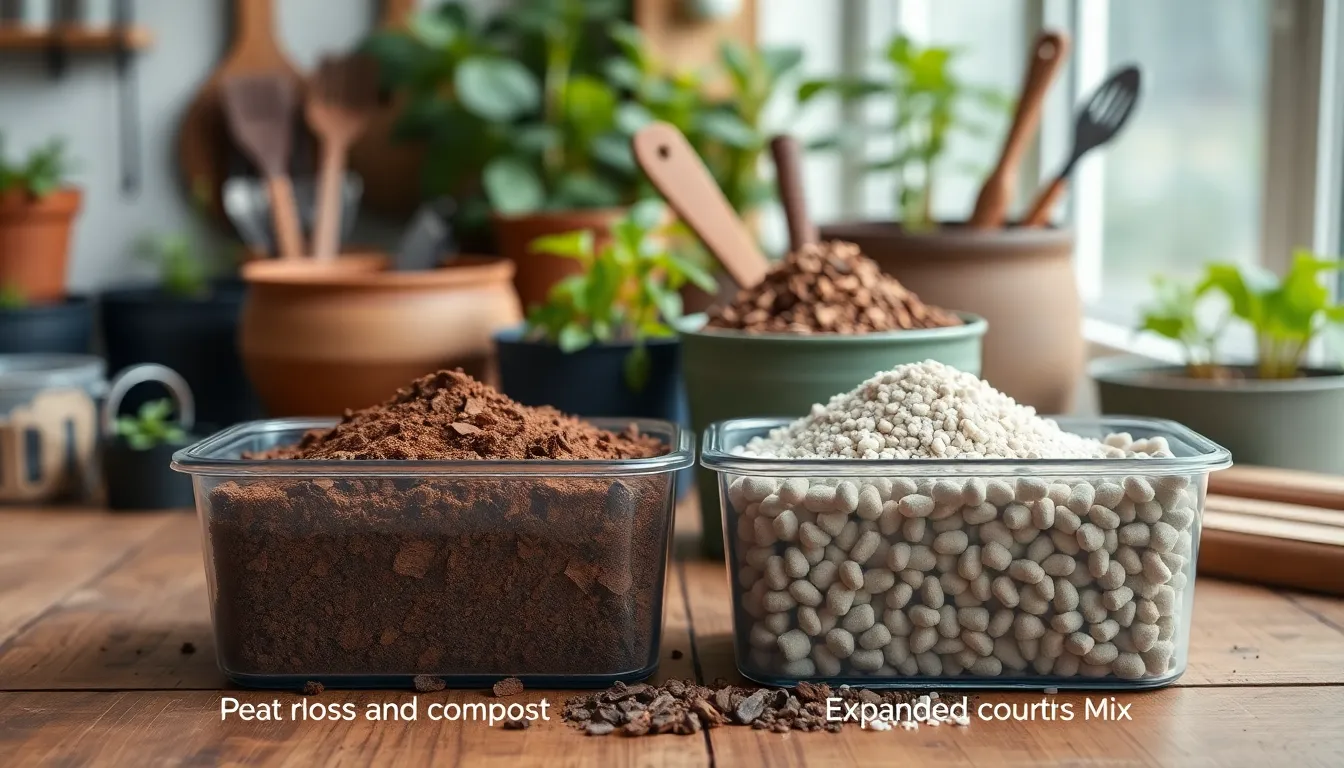
Choosing the right type of potting mix significantly impacts the growth and health of indoor plants. Understanding the differences between organic and synthetic mixes helps in making an informed choice.
Organic Potting Mix
Organic potting mixes consist of natural materials like peat moss, bark, and compost. This type of mix provides excellent moisture retention while allowing for aeration. The inclusion of compost enriches the soil with essential nutrients that promote plant growth. Many gardeners prefer organic mixes as they avoid synthetic additives and chemicals. Organic options support sustainable gardening practices, making them environmentally friendly. These mixes often benefit various indoor plants, from herbs to succulents.
Synthetic Potting Mix
Synthetic potting mixes contain manufactured materials, such as expanded clay pellets and synthetic fertilizers. They often provide consistent nutrient release for plants, promoting steady growth. The lightweight nature of synthetic mixes enhances drainage, preventing overwatering issues. Many commercial brands offer these mixes, with tailored formulas for specific plant needs. Indoor gardeners appreciate synthetic potting mixes for their convenience and effectiveness. They may also include moisture-retentive elements, ensuring a balance between hydration and aeration.
Key Ingredients to Look For
Selecting the right potting mix involves understanding key ingredients. Certain components significantly enhance plant health and growth.
Peat Moss
Peat moss serves as a primary ingredient in many potting mixes. It retains moisture effectively while allowing for proper aeration. This organic material enhances soil structure and provides essential nutrients. A high-quality mix contains a sufficient amount of peat moss to support root development and overall plant vitality.
Perlite and Vermiculite
Perlite and vermiculite are crucial for improving drainage and aeration. Perlite, a volcanic glass, promotes airflow and reduces compaction in the potting mix. Vermiculite, a mineral, helps retain moisture and nutrients. Blends containing both materials optimize the growing environment, ensuring roots access necessary resources without drowning.
Fertilizers
Fertilizers contribute essential nutrients to potting mixes. Balanced formulations often combine nitrogen, phosphorus, and potassium to promote robust growth. Organic fertilizers offer slow-release nutrients, maintaining soil fertility over time. Select potting mixes with integrated fertilizers for a convenient feeding solution, ensuring indoor plants thrive continuously.
Top Recommendations for Best Potting Mix for Indoor Plants
Selecting the right potting mix can significantly impact the health of indoor plants. Here are three top brands that stand out for their quality and performance.
Brand A Overview
Brand A offers a premium potting mix designed specifically for indoor plants. This blend features a combination of peat moss, perlite, and compost, ensuring excellent moisture retention and aeration. Users appreciate its lightweight texture, which promotes robust root growth. Additionally, Brand A includes a slow-release fertilizer to nourish plants over time. Many gardeners find it ideal for various types of houseplants, from succulents to ferns. Its consistency stands out among competitors, making it a preferred choice for serious indoor gardeners.
Brand B Overview
Brand B provides a versatile potting mix formulated for optimal drainage and nutrient delivery. Its ingredients include coconut coir, vermiculite, and compost, creating a well-balanced environment for plants. Indoor gardeners favor this mix for its organic components, promoting healthy growth without harmful additives. Furthermore, the lightweight formula encourages air circulation around the roots, crucial for preventing root rot. Many users report success with flowering plants and leafy greens when using this brand. Overall, Brand B’s blend caters to a wide spectrum of indoor gardening needs.
Brand C Overview
Brand C specializes in eco-friendly potting mixes made from renewable resources. This product contains a unique blend of bark, perlite, and worm castings, providing essential nutrients while enhancing soil structure. Gardeners appreciate the balanced moisture retention and drainage capabilities of this mix. Its organic composition supports sustainability, making it a responsible choice for environmentally conscious individuals. Additionally, the brand’s focus on promoting beneficial microbial activity ensures long-term plant health. Users often highlight its effectiveness for tropical plants and orchids, solidifying its reputation among indoor gardeners.
Tips for Choosing the Right Potting Mix
Selecting the right potting mix involves various considerations, especially regarding plant type and environmental factors.
Plant Type Considerations
Different plants have unique needs. Tropical plants thrive in mixes that retain moisture while ensuring good drainage. Succulents prefer a gritty, fast-draining blend, which can include sand and perlite for optimal growth. Foliage plants often excel in organic mixes that offer aeration and nutrient richness. Flowering plants benefit from potting mixes that combine moisture retention with balanced fertilizers, promoting vibrant blooms. Understanding these specific requirements helps in choosing a mix tailored to the plant type.
Environmental Factors
Indoor environments vary greatly. Light levels influence potting mix choice; bright spaces suit mixes that drain quickly to prevent root rot. Humidity also affects water retention, where dryer conditions necessitate more moisture-retentive blends. Temperature plays a role too; warmer areas may require mixes that facilitate airflow around the roots. Focusing on these environmental factors leads to more successful indoor gardening, ultimately enhancing plant health and vibrancy.
Conclusion
Selecting the right potting mix is vital for the success of indoor plants. Quality mixes not only enhance drainage and moisture retention but also provide essential nutrients for healthy growth. By understanding the unique needs of different plants and considering factors like light and humidity, gardeners can create the ideal environment for their green companions. The recommended brands offer a range of options to suit various plant types, ensuring that every indoor garden can thrive. Investing time in choosing the best potting mix pays off with vibrant and healthy plants that bring life to any space.


