


Indoor plants bring life to any space, but they can also attract uninvited guests—aphids. These tiny green pests may look harmless, but they’re like the party crashers of the plant world, sucking the sap from your beloved greenery and leaving behind a sticky mess. If you’ve ever spotted these little critters munching away on your plants, you know they can turn a thriving indoor jungle into a sad, droopy disaster.
Aphids on Indoor Plants
Aphids represent a significant threat to indoor plants, causing various issues by extracting vital nutrients. These tiny pests, commonly green or black, reproduce quickly and can multiply in large numbers within a short time. Their feeding habits lead to weakened plants, curling leaves, and stunted growth. Indoor gardeners often discover aphids clustered on new growth, leaf undersides, and stem tips.
Sticky residue, known as honeydew, frequently accompanies aphid infestations. This substance not only attracts other pests, like ants, but also encourages the growth of sooty mold, which can block sunlight and hinder photosynthesis. Monitoring the presence of aphids becomes crucial, as early intervention can prevent extensive damage.
Many indoor plants, such as roses, ferns, and succulents, attract aphids due to their nutrient-rich tender shoots. Infestations can spread quickly between plants, especially in closed environments. Identifying these pests early prevents them from overtaking an indoor garden.
Natural predators, such as ladybugs and lacewings, can control aphid populations effectively. Introducing these beneficial insects or utilizing neem oil and insecticidal soaps also proves helpful. Regular inspection of plants and maintaining optimal growing conditions minimizes the risk of infestation and supports healthy growth.
Common Types of Aphids
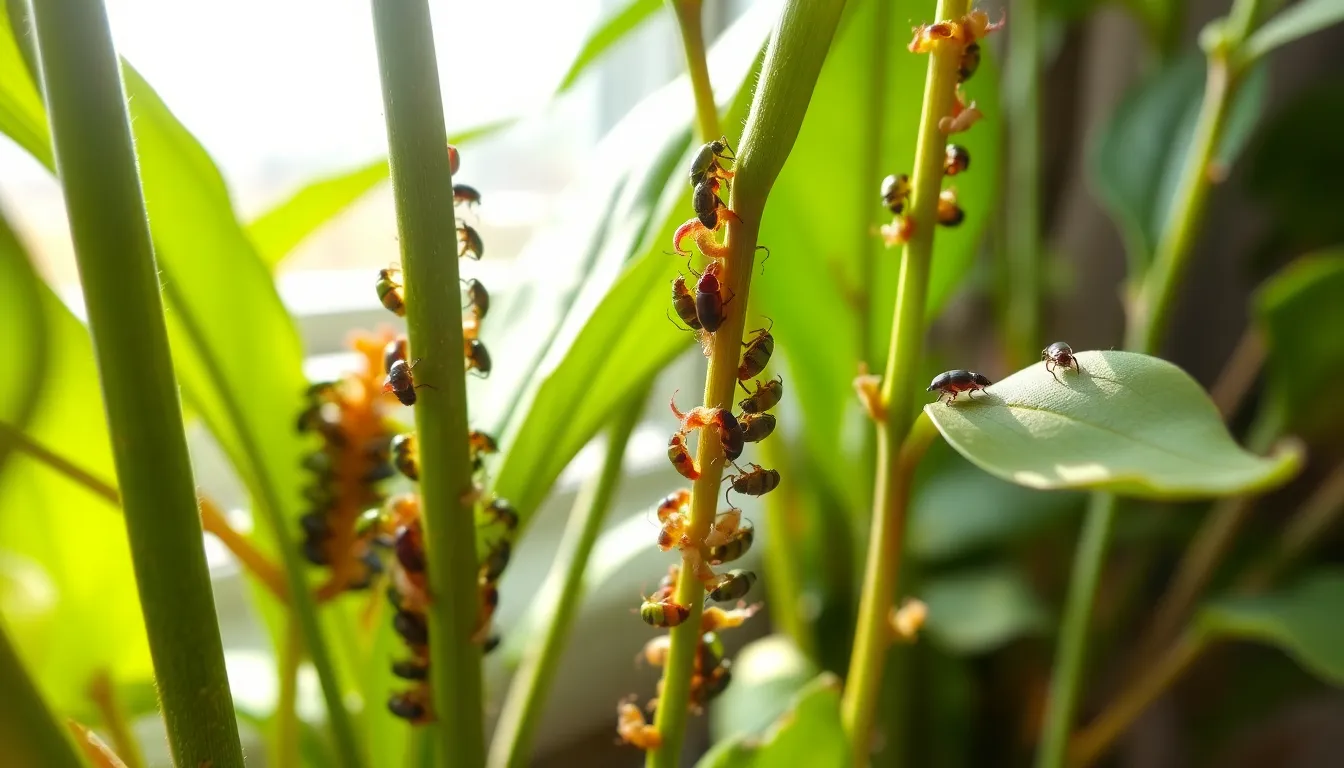
Aphids come in various types, each posing unique threats to indoor plants. Understanding these common types helps in identifying and addressing infestations quickly.
Green Aphids
Green aphids, also known as apple aphids, typically appear light green. These tiny pests favor young leaves and stems, where they feed on sap. Infestations can lead to leaf curling and yellowing, leaving plants weakened. Green aphids reproduce rapidly, making them a frequent problem for indoor gardeners. Regular monitoring of new growth can help catch these pests early. Effective control methods include introducing natural predators or using insecticidal soaps.
Black Aphids
Black aphids, often called black bean aphids, are usually dark in color. They tend to cluster on the undersides of leaves and on young shoots. These pests can cause significant damage to plants, including wilting and reduced vigor. Black aphids are known to transmit plant viruses, amplifying their threat to indoor gardens. Identifying them early is crucial for effective management. Solutions include using neem oil or fostering beneficial insects like ladybugs.
Pea Aphids
Pea aphids are recognizable by their green or purple hue. These pests typically infest legumes and other plants, causing stunted growth and distorted leaves. They extract vital nutrients, significantly impacting plant health. Detecting these aphids early ensures better outcomes for affected plants. Control methods include manual removal and using predatory insects to keep their numbers low.
Signs of Aphid Infestation
Aphid infestations present several signs that indoor plant owners can identify. Recognizing these indicators early helps minimize damage and protect plant health.
Visual Indicators
Visible signs of aphids include tiny, soft-bodied insects clustered on plant stems and leaves. Green or black coloration is common among these pests. Some may find sticky residue, or honeydew, on leaves and surfaces, indicating aphid presence. Sooty mold often develops in response to honeydew, creating dark patches on plants. Leaf distortion, such as curling or wilting, frequently occurs as a reaction to aphid feeding.
Symptoms in Plants
Symptoms of aphid damage become noticeable through changes in plant vitality. Nutrient depletion results in yellowing leaves, while wilting can lead to droopy stems. Stunted growth often affects new shoots, rendering them less robust. In severe cases, aphids may transmit plant viruses, which contribute to further decline in plant health. Regularly monitoring plants for changes enables early intervention and management of potential infestations.
Control Methods for Aphids
Effective control methods for aphids involve a combination of chemical treatments and natural remedies. Quick action minimizes damage and maintains healthy indoor plants.
Chemical Treatments
Insecticidal soaps offer a targeted approach to killing aphids. These products disrupt the insect’s cell membranes, leading to dehydration and death. Neem oil proves effective, as it hinders aphid reproduction while eliminating existing populations. Both treatments require thorough application on all plant surfaces for optimal results. Regularly following the manufacturer’s instructions ensures safe and effective use. Chemical options should be a last resort, particularly for sensitive indoor environments.
Natural Remedies
Introducing natural predators into indoor gardens helps manage aphid populations. Ladybugs and lacewings target aphids, providing a biological control solution. Another method involves using a mixture of water and mild dish soap, which can suffocate aphids upon contact. Reapplying this solution every few days promotes long-term effectiveness. Essential oils, such as peppermint or clove, deter aphids when diluted and sprayed on affected plants. These natural strategies contribute to maintaining a balanced indoor ecosystem without harsh chemicals.
Prevention Tips for Indoor Plants
Regularly checking indoor plants for aphids supports early detection and intervention. Maintaining optimal growing conditions reduces stress on plants, making them less susceptible to infestations. Proper watering practices, including allowing soil to dry out between cycles, can help deter pests like aphids.
Ensuring adequate air circulation around plants prevents high humidity levels that attract these pests. Isolating new plants for a few weeks allows for the observation of any hidden aphid populations before they can spread. Using traps can also assist in monitoring aphid presence, helping to catch any infestations early.
Introducing natural predators like ladybugs and lacewings proactively manages aphid populations. These beneficial insects feast on aphids and can maintain a healthy indoor ecosystem. Keeping a healthy population of these allies minimizes the need for chemical treatments.
Utilizing barriers, such as fine mesh cloth, protects vulnerable plants from insect intrusion. This method is especially useful during warm months when aphids thrive. Furthermore, regularly cleaning plant leaves removes any potential eggs or larvae.
Adopting companion planting strategies can enhance pest control. Planting garlic, chives, or marigolds near susceptible plants deters aphids while providing additional benefits.
A consistent fertilization routine strengthens plant health, making them less appealing to aphids. Using organic fertilizers supports growth and reduces the likelihood of infestations.
Implementing these preventive measures builds resilience in indoor plants against aphids. With vigilance and care, it’s possible to maintain a thriving indoor garden without major pest issues.
Conclusion
Aphids can wreak havoc on indoor plants if left unchecked. Their rapid reproduction and ability to extract vital nutrients can lead to significant damage. Recognizing the signs of an infestation early is crucial for effective management.
By employing a combination of natural remedies and careful monitoring, indoor gardeners can protect their plants and maintain a healthy environment. Preventive measures like maintaining optimal growing conditions and introducing natural predators can go a long way in keeping aphids at bay.
With diligence and the right strategies, it’s possible to enjoy a thriving indoor garden free from these pesky invaders.


