


Indoor plants are the unsung heroes of home decor, but even the most resilient green friends need a little TLC. Enter the watering can—the trusty sidekick every plant parent needs. It’s not just a vessel for H2O; it’s a statement piece that can elevate your watering game from mundane to magnificent. Imagine your plants whispering sweet nothings of gratitude as you shower them with love from a stylish can that matches your vibe.
Watering Can For Indoor Plants
Watering cans serve multiple purposes for indoor plant care. These essential tools aid in delivering precise amounts of water, ensuring plants receive adequate hydration without overwatering. Various designs exist to suit different preferences and spaces.
Material selection influences durability and aesthetics. Plastic watering cans offer lightweight options, making them easy to maneuver. Metal watering cans, on the other hand, provide sturdy construction and often feature decorative finishes that enhance home decor.
Spouts vary significantly across models. Choose a long, narrow spout for targeted watering in tight spaces, while a wider spout might offer faster watering for larger plant clusters. Ergonomic handles promote comfortable use, reducing strain during watering sessions.
Capacity also matters when selecting a watering can. Smaller models, typically around 1-2 liters, work well for succulents and smaller pots. Larger models, anywhere from 3-5 liters, efficiently water multiple plants without frequent refills.
Design aesthetics can enhance the home environment. Some models feature vibrant colors or elegant patterns, adding to the visual appeal. Practicality does not get overlooked; many models include measurement markings for accuracy in water distribution.
Investing in a quality watering can contributes to successful indoor gardening. Proper tools facilitate effective care, ensuring plants thrive in a home setting. Selecting the right watering can from the diverse options available enhances both the plant care experience and the overall ambiance of indoor spaces.
Types Of Watering Cans
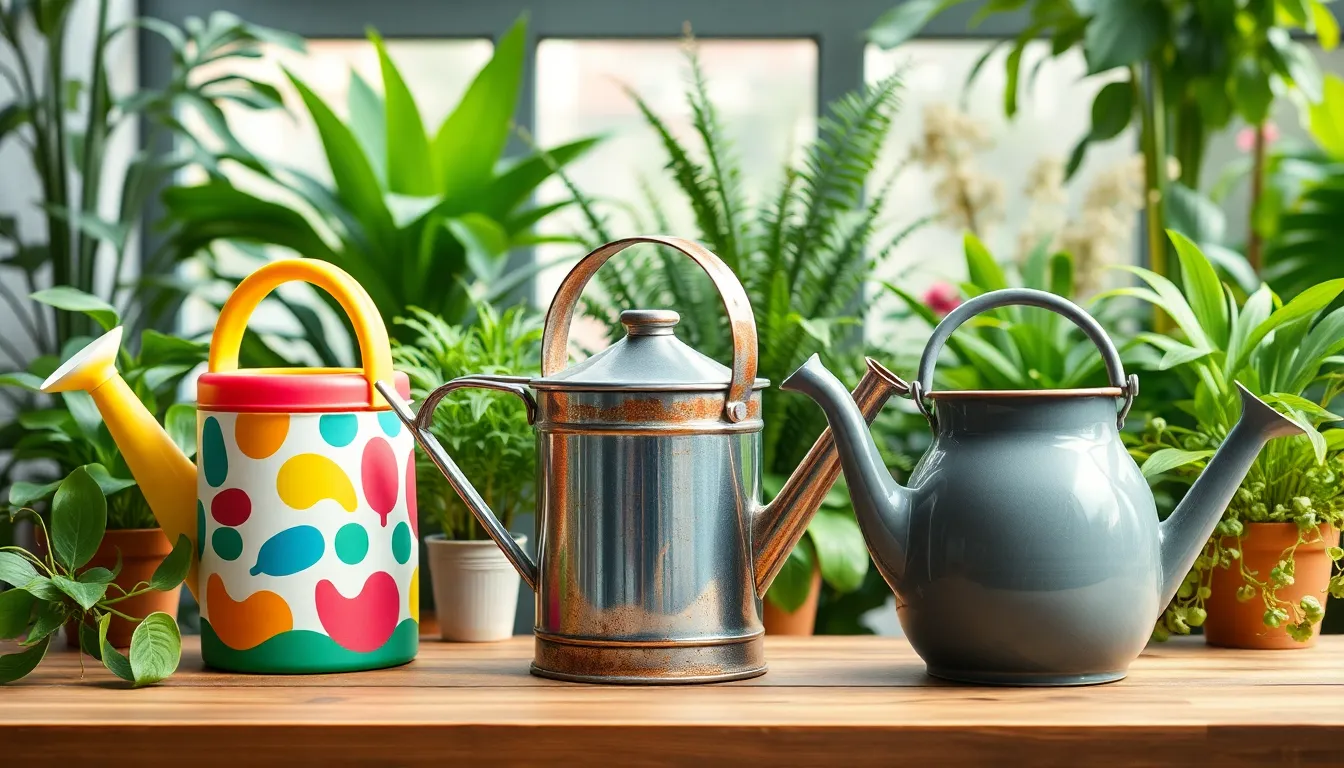
Choosing the right watering can involves understanding different types specific to indoor plants. Each type offers unique benefits that can enhance the watering experience.
Plastic Watering Cans
Plastic watering cans are lightweight and easy to handle, making them perfect for indoor use. Many options feature ergonomic designs, allowing for comfortable pouring without strain. Durability varies, with thicker plastic models offering better resistance to wear. They often come in various colors and styles, adding aesthetic value as well. Measurement markings on some models provide accuracy in water delivery, promoting healthy plant growth.
Metal Watering Cans
Metal watering cans often feature a classic appearance that appeals to many plant owners. Made typically from galvanized steel or aluminum, they offer excellent durability and long-term use. These cans may include rust-resistant coatings, extending their lifespan even further. Weight contributes to stability during watering, ensuring a controlled flow. Decorative designs enhance indoor aesthetics, turning a functional item into a stylish accessory.
Ceramic Watering Cans
Ceramic watering cans add a touch of elegance to indoor gardening. They provide excellent insulation for water, keeping it at the desired temperature. Unique glazes or finishes allow for personalization and complement various interior styles. However, these cans are often heavier than plastic or metal options, so careful handling is necessary. Delicate spout designs ensure precise watering, minimizing the chance of overwatering plants.
Key Features To Consider
Selecting the right watering can for indoor plants involves several important features. Understanding these aspects can enhance the watering experience and support plant health.
Size And Capacity
Size matters when it comes to watering cans. Small plants thrive with smaller containers holding 0.5 to 1 liter, allowing for easier maneuverability and targeted watering. Medium-sized plants often require cans with 1 to 2 liters of capacity, striking a balance between convenience and efficiency. Larger plants benefit from cans that hold 2 to 3 liters or more, minimizing the need for frequent refills. Choosing the appropriate size ensures that the watering can meets the specific needs of various plants, preventing overwatering or underwatering.
Spout Design
Spout design directly affects watering precision. Long and narrow spouts allow for targeted watering, helping to reach those hard-to-access areas in pots without spilling. A flexible spout can adjust to different angles, providing versatility in watering techniques. The best watering cans incorporate a showerhead or perforated tip for gentle watering, making it ideal for delicate plants. An effective spout design not only promotes accurate watering but also protects plant leaves and surfaces from damage.
Handle Comfort
Handle comfort plays a crucial role in usability. Ergonomically designed handles reduce strain on the wrist and hands during use. A contoured grip offers enhanced control, allowing for smooth pouring without discomfort. Lightweight materials also contribute to ease of handling, especially when filling the can to capacity. For long watering sessions, a comfortable handle ensures a pleasant experience while caring for indoor plants. Prioritizing handle design leads to a more enjoyable and efficient watering process.
Benefits Of Using A Dedicated Indoor Watering Can
Using a dedicated indoor watering can offers several advantages for plant care. A precise watering can ensures that plants receive just the right amount of water.
Precision Watering
Precision watering is crucial for the health of indoor plants. A well-designed spout allows for targeted delivery, directing water exactly where it’s needed. Long, narrow spouts facilitate reaching difficult spots without creating a mess. Targeting root zones encourages better absorption and minimizes excess water on leaves. Additionally, many indoor watering cans have measurement markings. These markings aid in delivering accurate amounts of water, reinforcing proper care practices. Ultimately, precise watering supports healthier plant growth and prevents stress on the plants.
Reducing Overwatering Risks
Reducing overwatering risks is another significant benefit of using a dedicated watering can. Overwatering can lead to root rot and other issues, compromising plant health. Using a watering can designed for indoor plants helps deliver measured amounts suitable for specific plants. Plastic and metal cans often feature ergonomic designs that enhance user control and comfort. Less hassle during watering sessions decreases the likelihood of accidental oversaturation. For instance, smaller plants thrive when watered carefully, while larger plants require different attention levels. By prioritizing appropriate watering techniques, plant owners can create a thriving indoor garden.
Maintenance Tips For Watering Cans
Cleaning a watering can regularly prevents the buildup of algae and minerals. Use warm, soapy water for effective removal. Rinse thoroughly to ensure no residue remains, as this can affect water quality.
Inspect the spout for blockages frequently. Removing debris from the spout allows for consistent water flow. Using a thin brush or pipe cleaner helps clear any obstructions effectively.
Drying the watering can after use reduces the risk of rust for metal cans. A dry environment extends the life of the watering can. Plastic options typically hold up better, but they can still benefit from a dry storage area.
Storing the watering can in a sheltered location is essential. Avoid exposure to harsh weather conditions. Keeping it indoors or in a protected spot maintains its appearance and functionality.
Checking for leaks is crucial to ensure efficient watering. Examine the base and spout regularly for signs of wear. Repairing any damage promptly prevents water waste and maintains usage efficiency.
Filling the can with clean water improves plant health. Always use fresh water, as stagnant water may introduce pathogens. Avoid mixing chemicals or fertilizers directly in the watering can unless specified.
Rotating the use of multiple watering cans facilitates efficient watering. Each can serve for different plant types, ensuring specific needs are met. This practice streamlines the watering process and maintains plant health.
Prioritizing these maintenance tips enhances the usability and lifespan of watering cans. Good care practices not only improve watering precision but also contribute to a healthier indoor garden.
Conclusion
Choosing the right watering can for indoor plants is crucial for both plant health and the enjoyment of the gardening experience. A well-designed watering can enhances precision and comfort while adding a touch of style to any indoor space. By considering factors like size, spout design, and material, plant owners can select a can that meets their specific needs.
Regular maintenance of the watering can not only prolongs its life but also ensures optimal performance. With the right tools in hand, nurturing indoor plants becomes a rewarding and fulfilling endeavor. Investing in a quality watering can is a step towards creating a vibrant and thriving indoor garden.


